Becoming Leandra

AI Character Research / Editorial Worldbuilding
Becoming Leandra
One synthetic identity across changing images and situations
The character is the constraint. Everything else has to earn its place.
2026
In brief
- The question
- How do you preserve one specific synthetic identity when image tools keep drifting away from it?
- Creative decision
- Fix the identity reference first, then vary wardrobe, setting and movement. Camera distance and gesture must still belong to the same character.
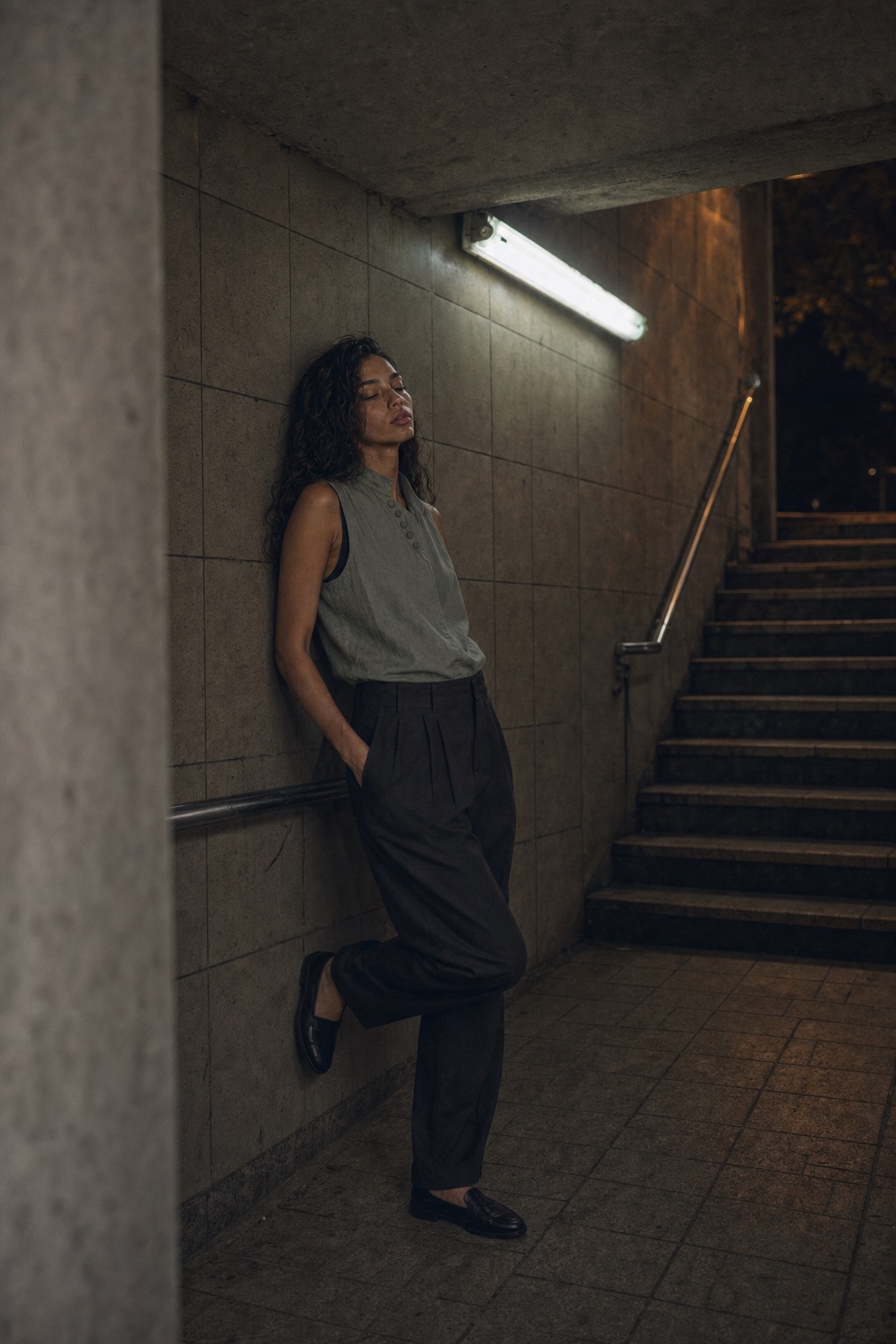
Selected output
Leandra is a synthetic persona. The images and films are character-design research, not documentation of a real person.

Project facts
- My contribution
- Concept Direction · Character Canon · AI Image/Video Direction · Content System
- Delivered
- A documented character canon and reusable research framework for directing identity, wardrobe, scenes, image and motion as one synthetic persona.
- Context & status
- Independent character research · ongoing
Research & process
01 · The tension
The danger was never that Leandra would look strange. The danger was that she would look like everyone.
The project started as an exploration of synthetic presence and quickly became a discipline in refusing drift. Generative tools can beautify, simplify and average the face. The creative question became how to keep one identity alive through unstable image systems.
The future still needs tenderness.
02 · Character canon
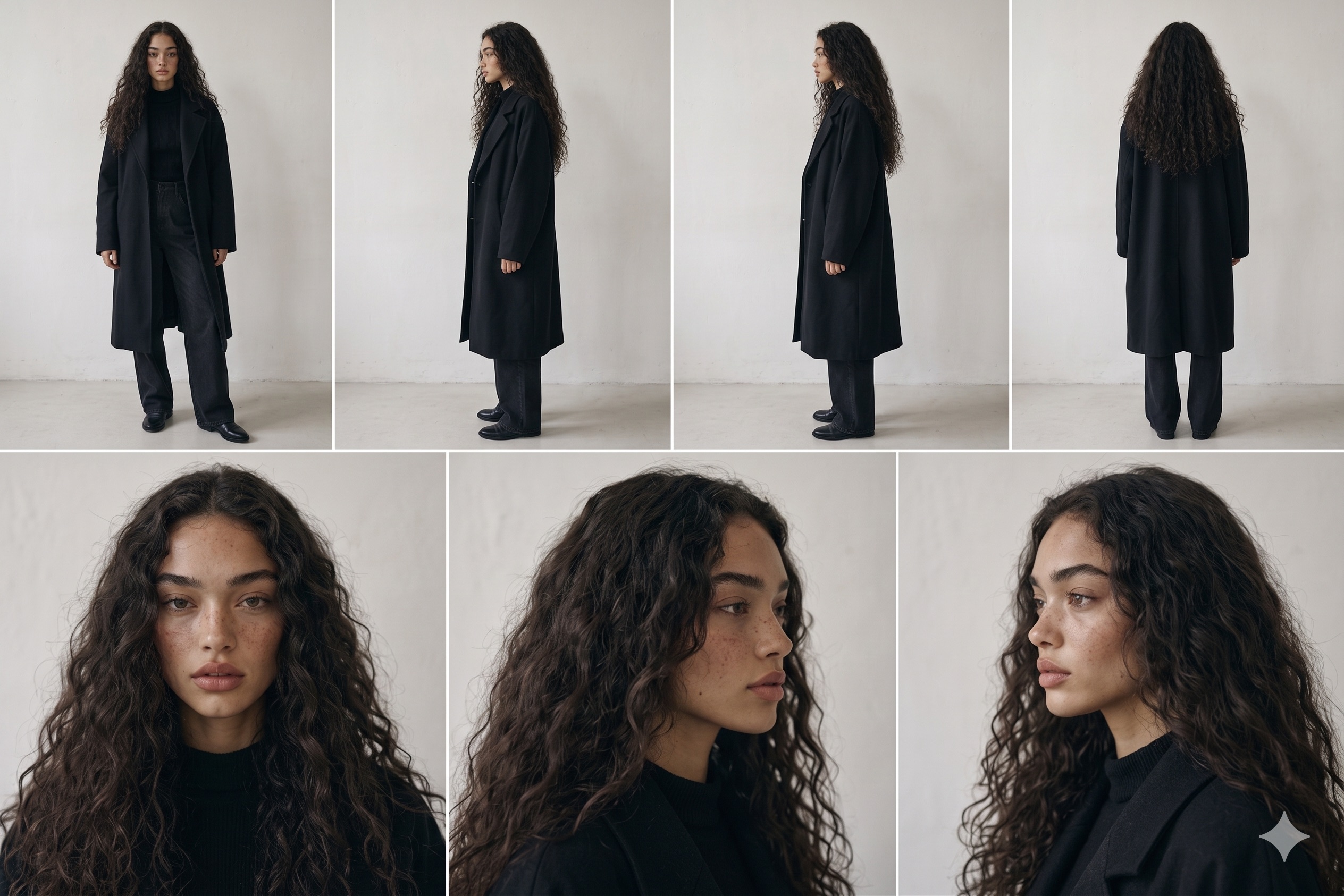
A face lock became a creative operating system.
Leandra is held by strict identity rules: youthful face, sleepy hazel-brown eyes, natural asymmetry, embedded freckles, long dark curls, guarded presence. The canon is not cosmetic detail. It is the condition that lets the character continue instead of being reinvented with every generation.
03 · Worldbuilding
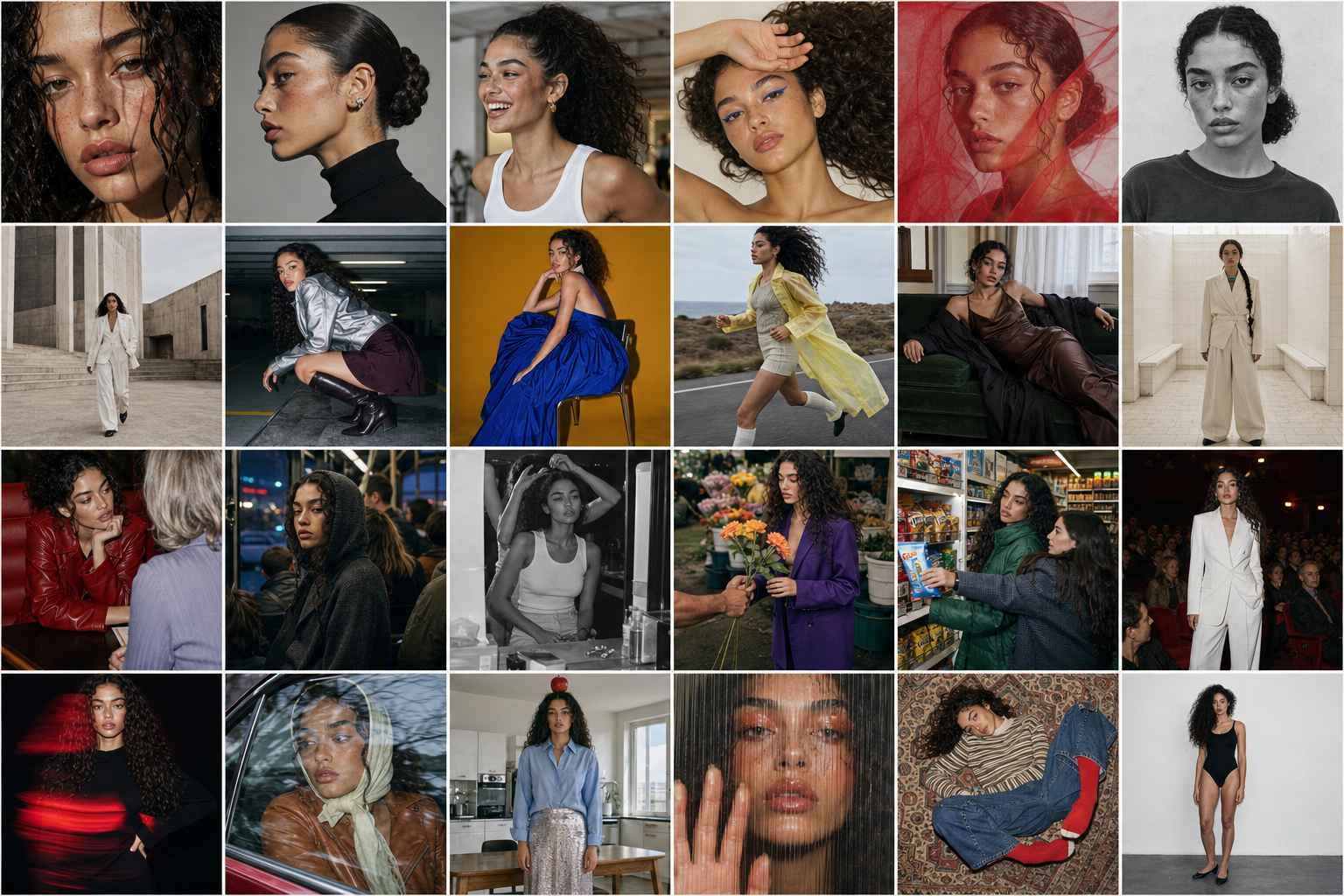
Nothing is random. Every image has to know what happened before it.
The Leandra OS translates character, memory and scene into a repeatable workflow. A new image begins with emotional state, returning memory, material motif, gesture and distance—not with a decorative prompt.
- 01
Identity before style
The face, posture and emotional temperature are protected before fashion or setting is varied.
- 02
Scene before image
Each output needs a small action, a tension and a reason to exist after the previous one.
- 03
Distance before distribution
Access changes from image to image. The character decides how close the viewer gets; the channel only distributes the result.
04 · Authored absence
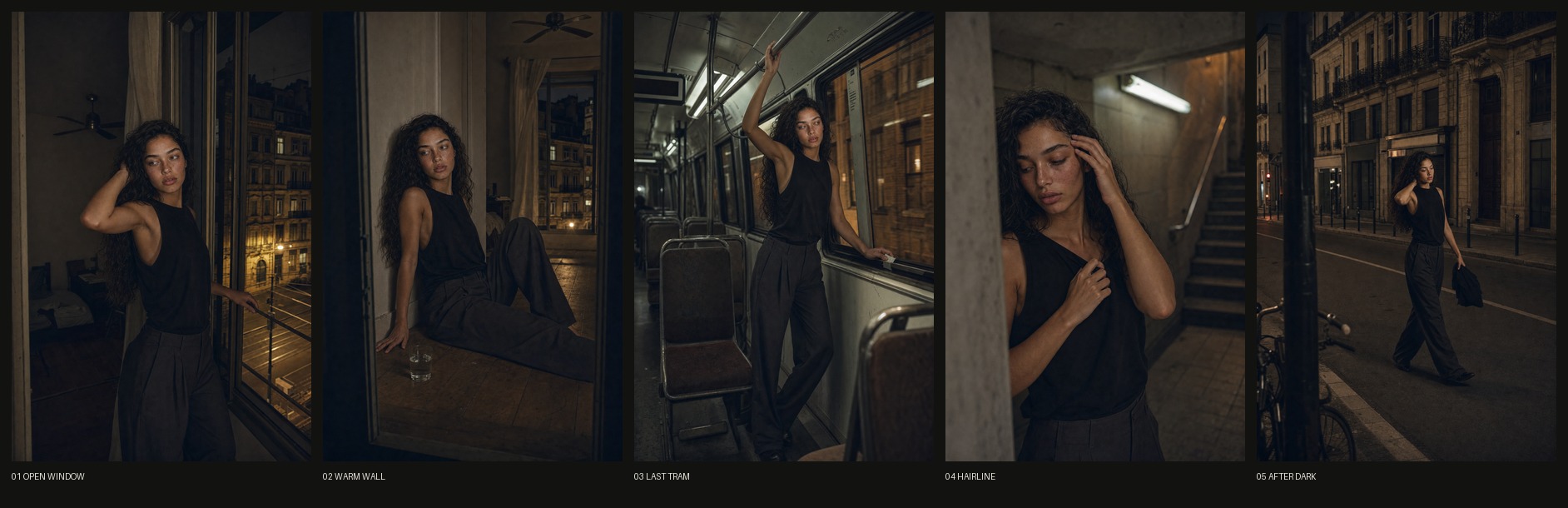
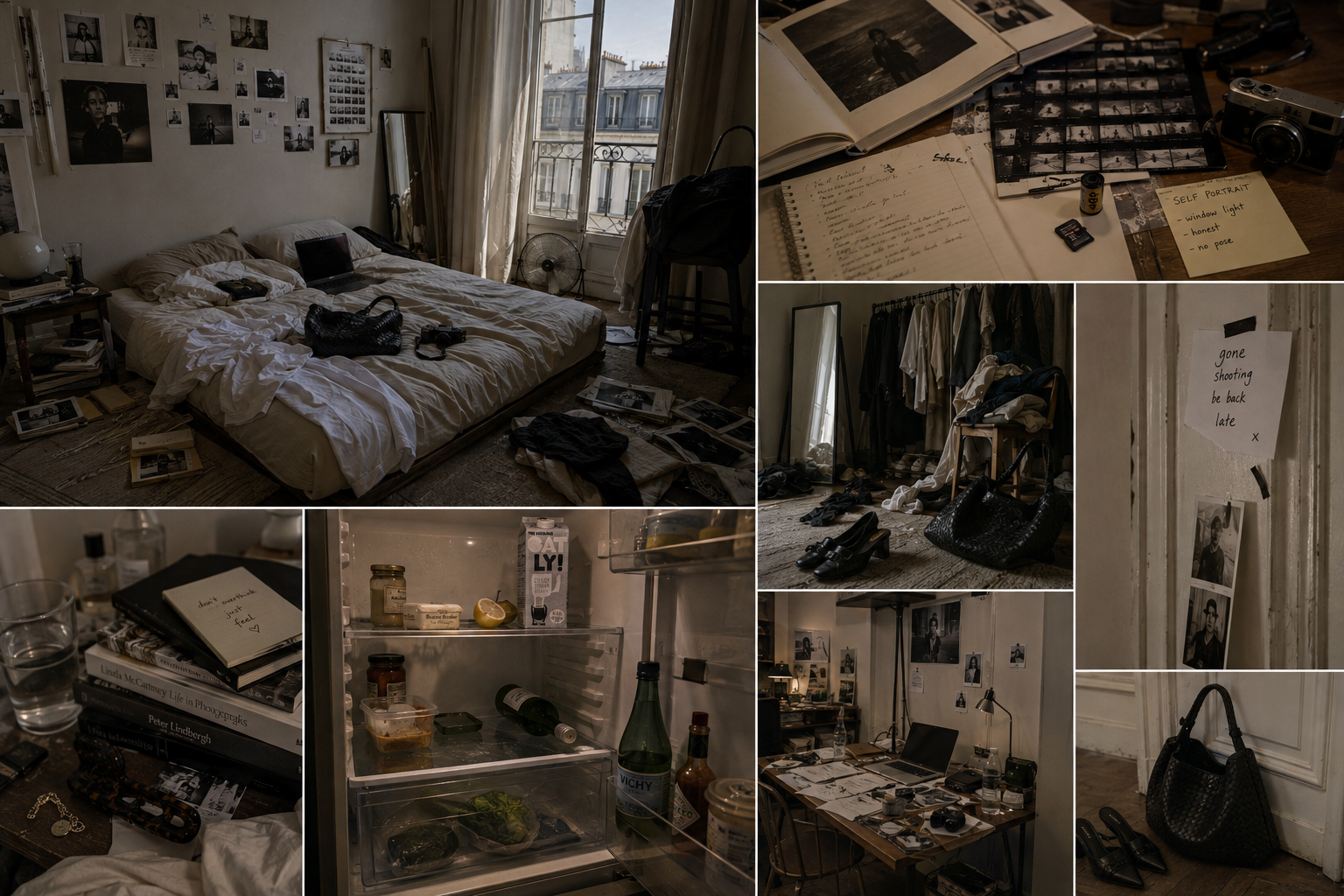
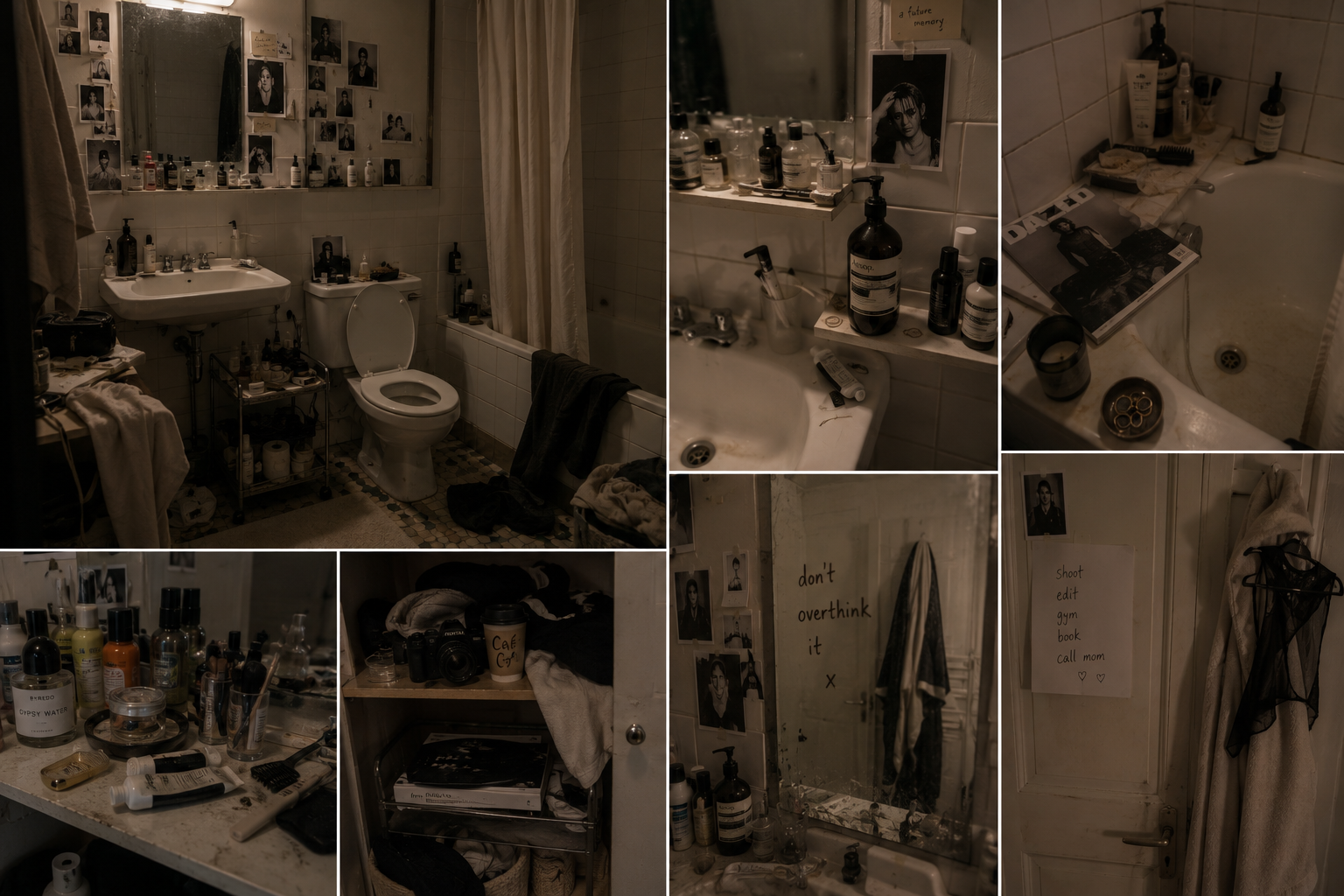
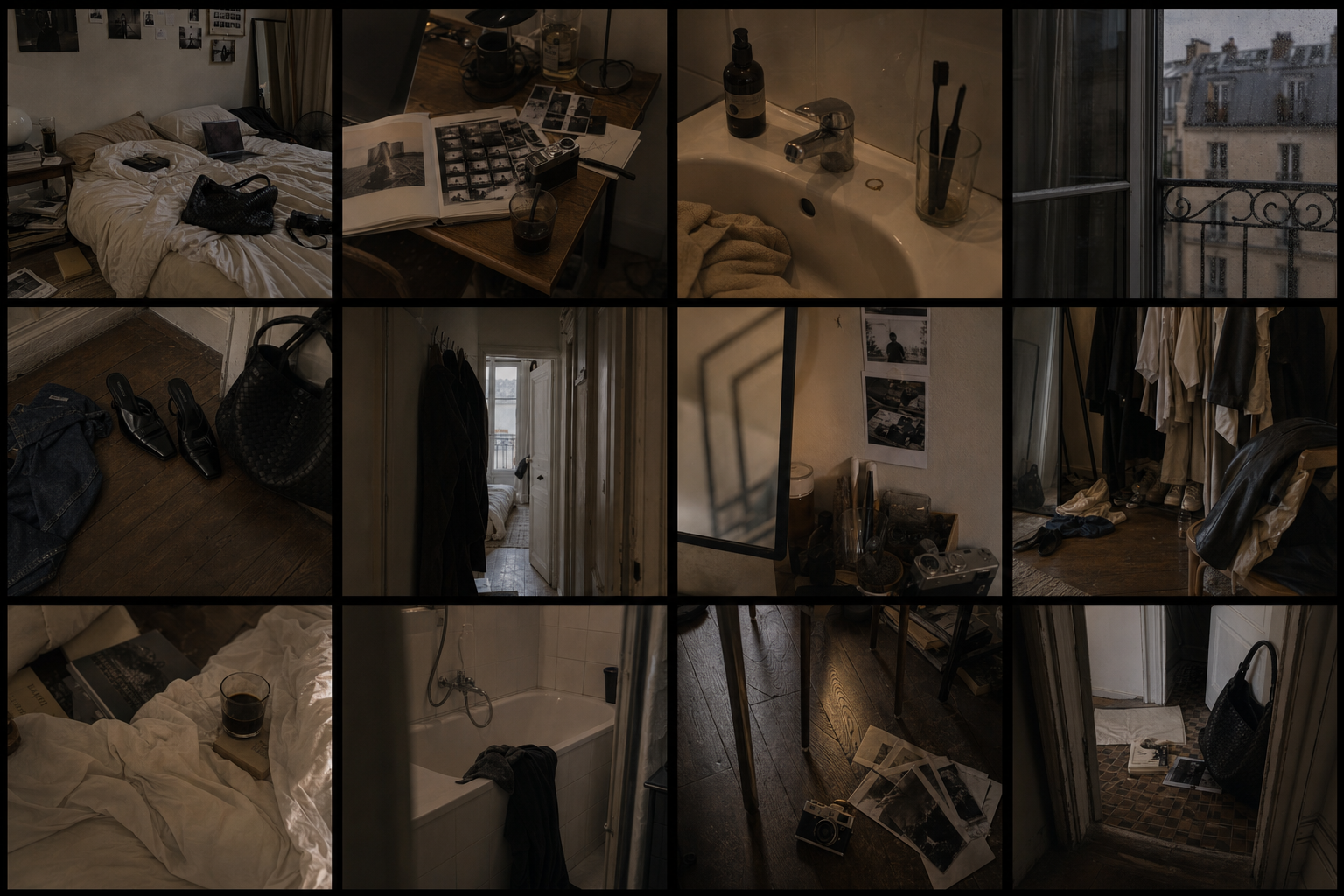
A room can hold character without showing her.
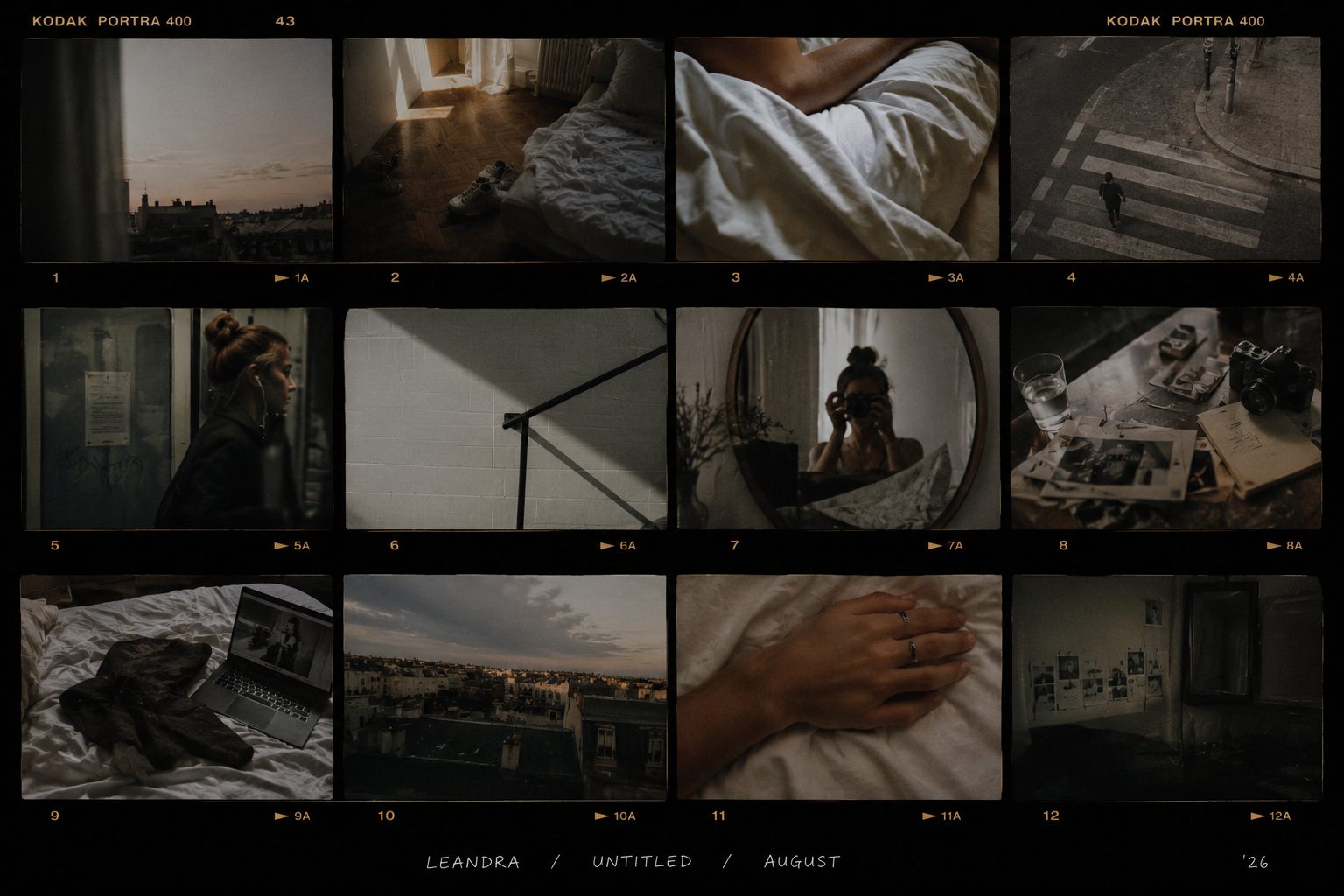
Leandra's apartment is not a backdrop. It is an index of use: an unmade bed, contact prints, bathroom light, clothes between decisions, a camera put down mid-thought. The environment is built through recurring evidence rather than styled disorder. Her own photographs complete the loop—the world is not only designed around Leandra; it is selected, framed and edited by her.
The apartment remembers her before the portrait does.
05 · The city
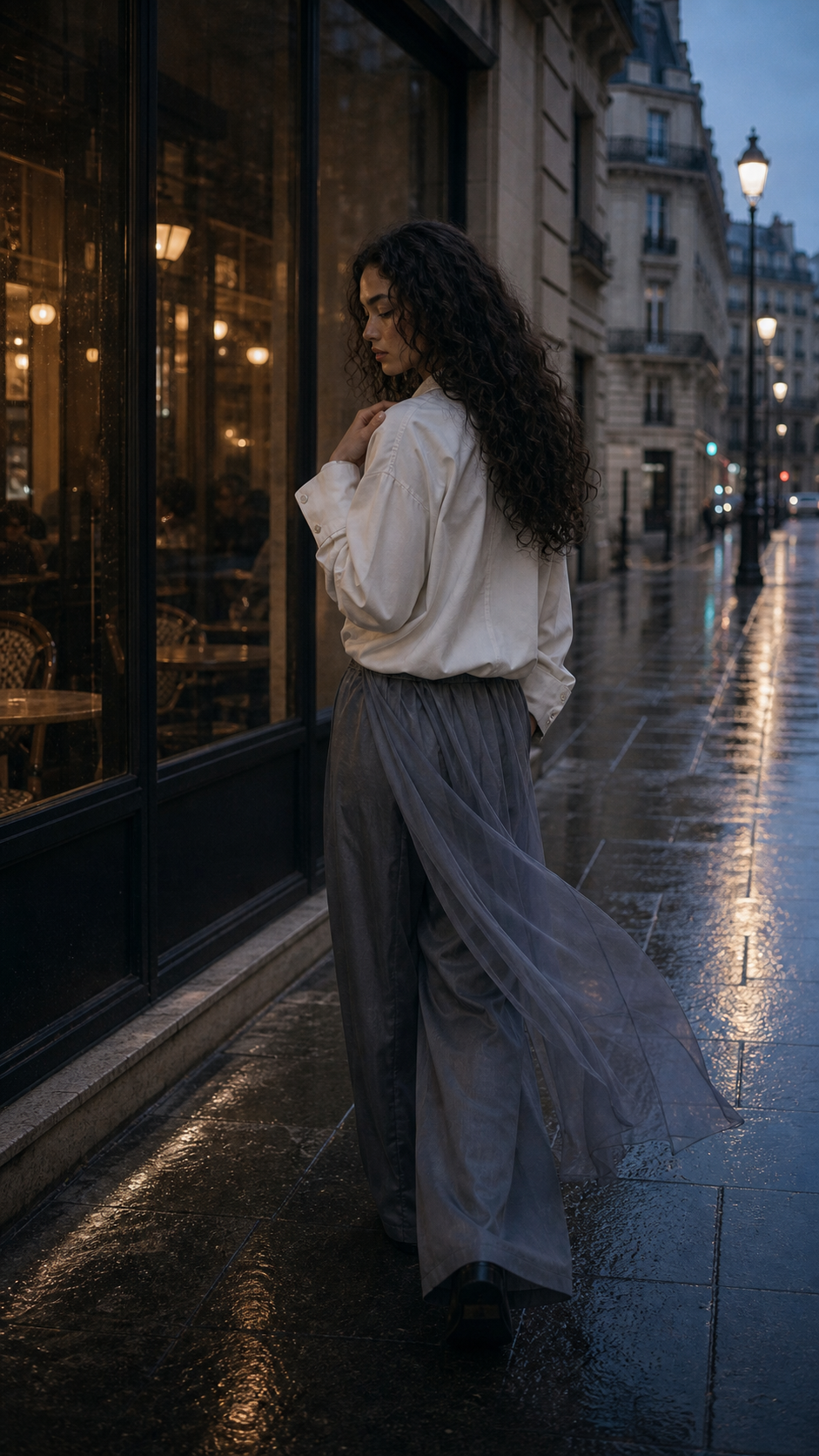
She lives in a city that feels remembered, but cannot be located.
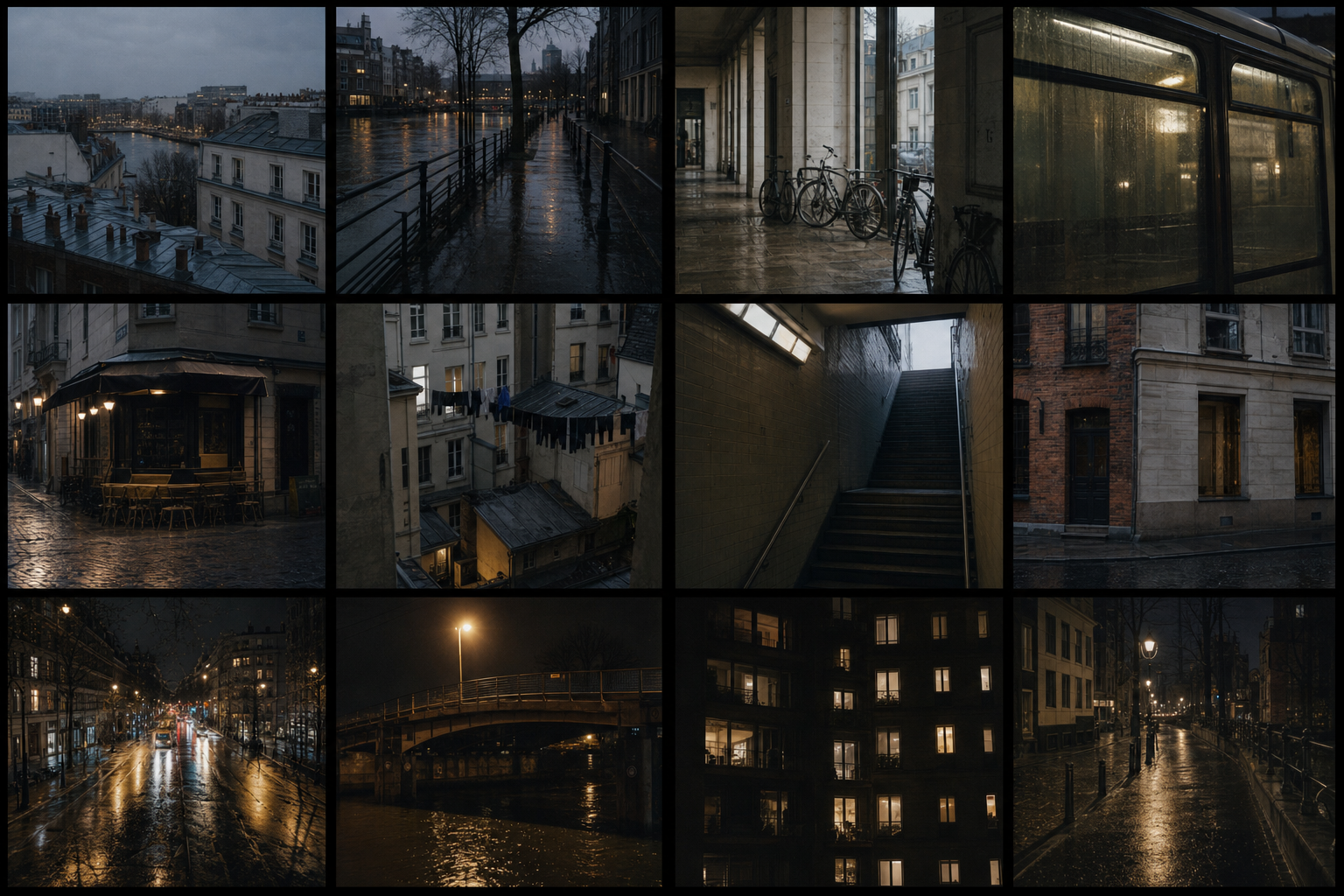
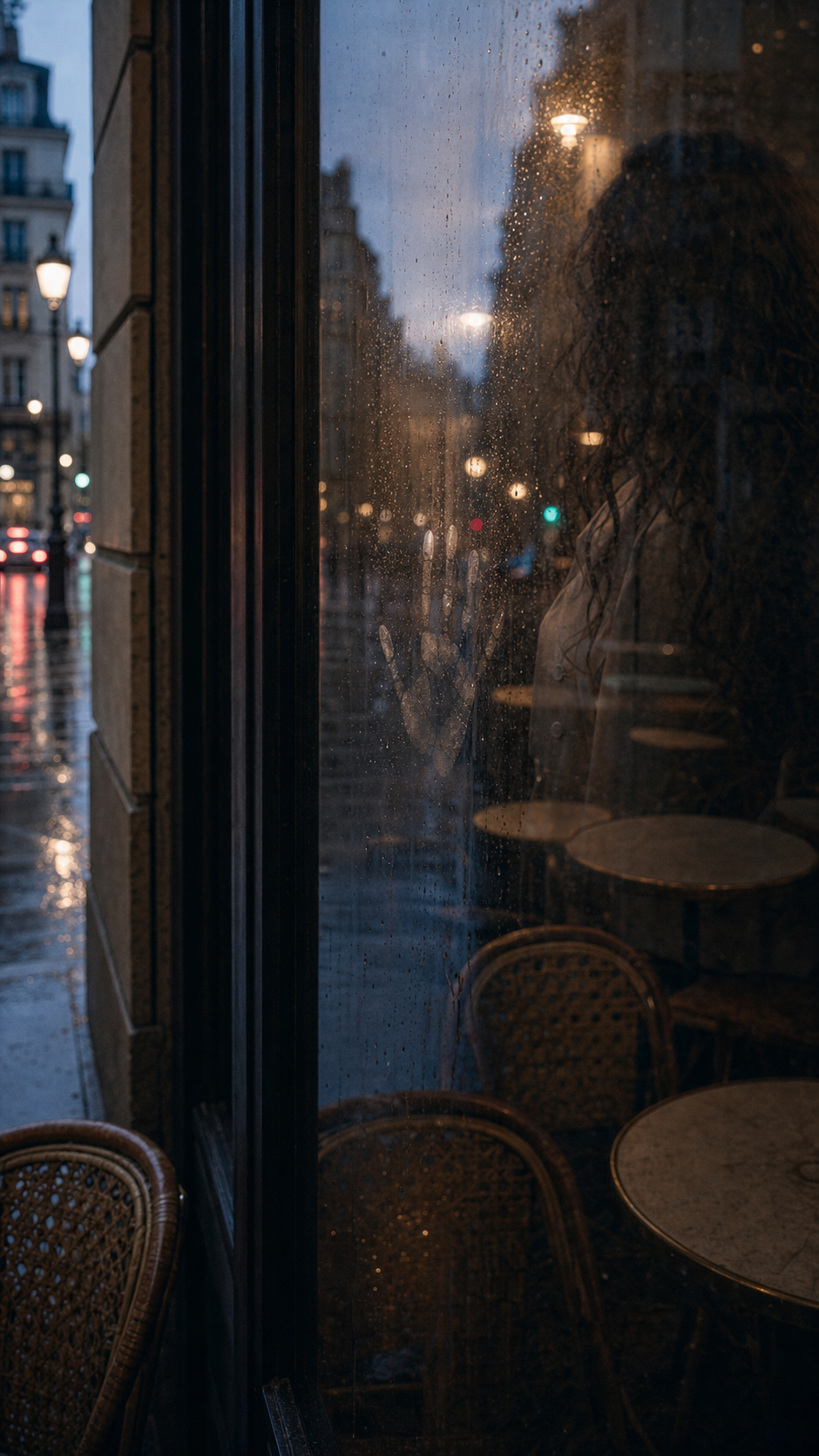
Leandra's city is an anonymous European metropolis built from overlapping urban memories. Amsterdam gives it water, intimate scale, bicycles, brick and tram logic; Paris gives it pale stone, zinc roofs, passages, courtyards and late-night boulevards. Those references are never pasted together as landmarks. They become one recurring system of routes, surfaces and weather—a place recognisable by how she moves through it, not by what a tourist would photograph.
Not Amsterdam. Not Paris. The city she made from both.
06 · Authored distance
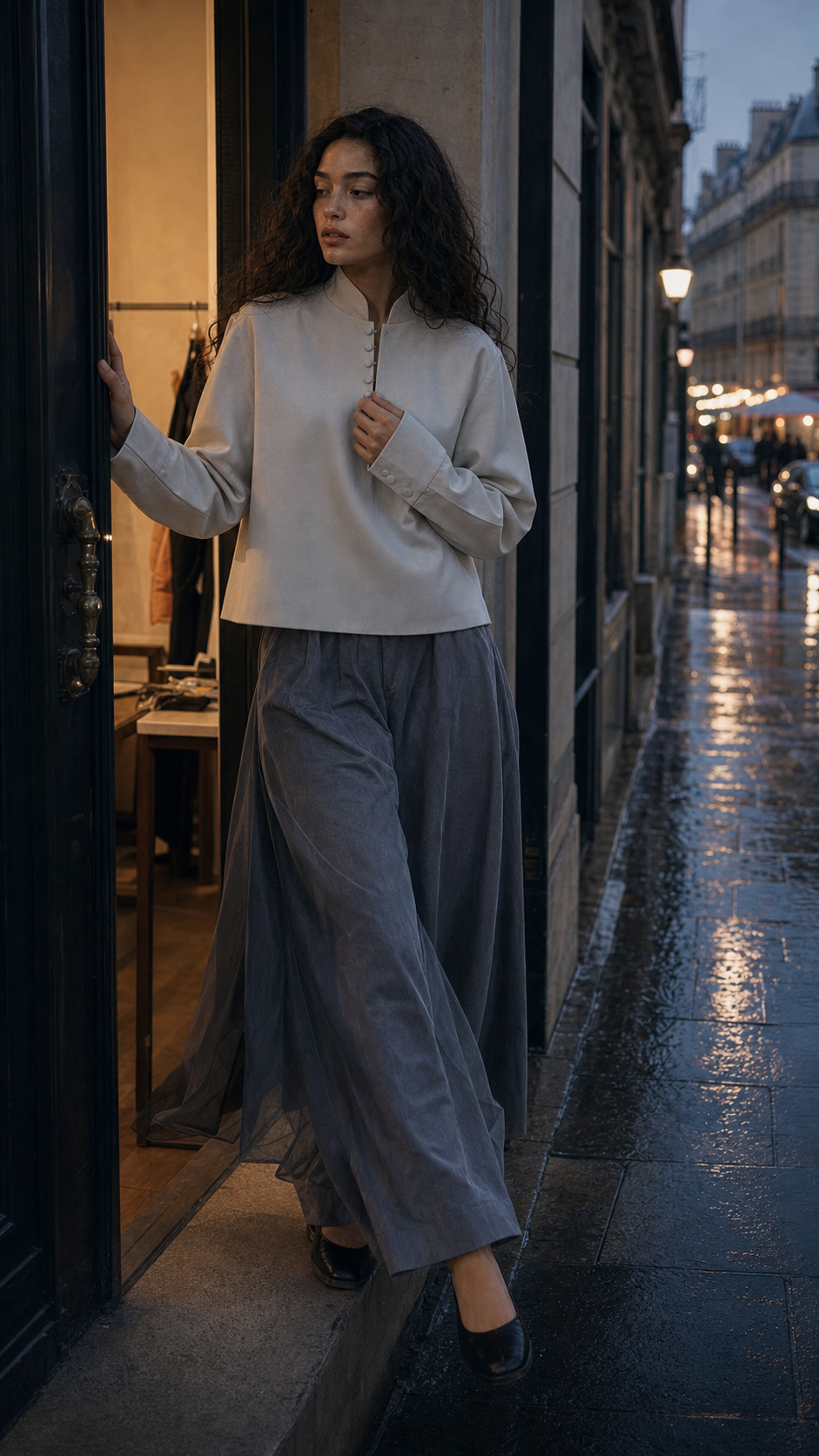
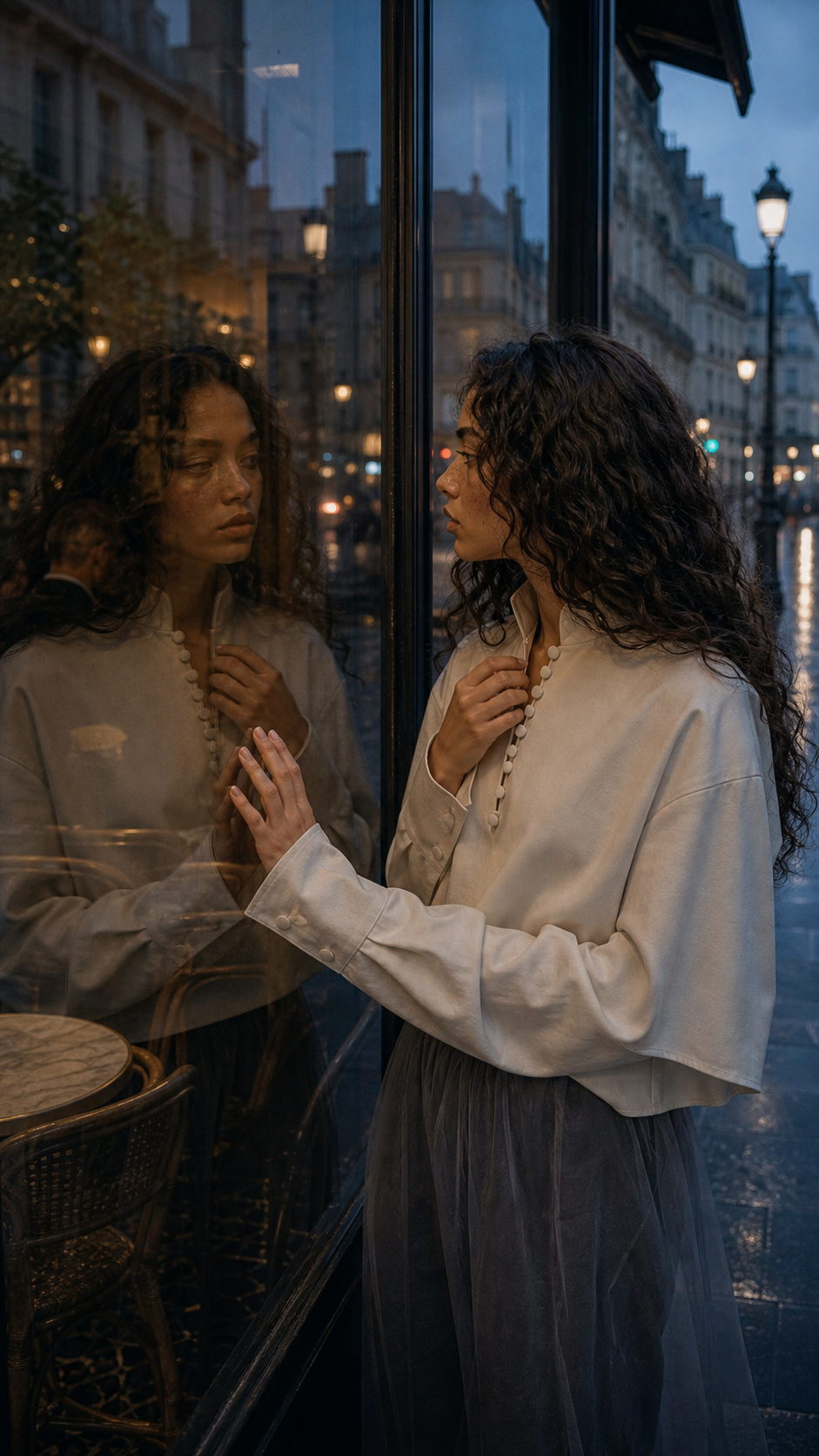
Leandra never gives equal access.
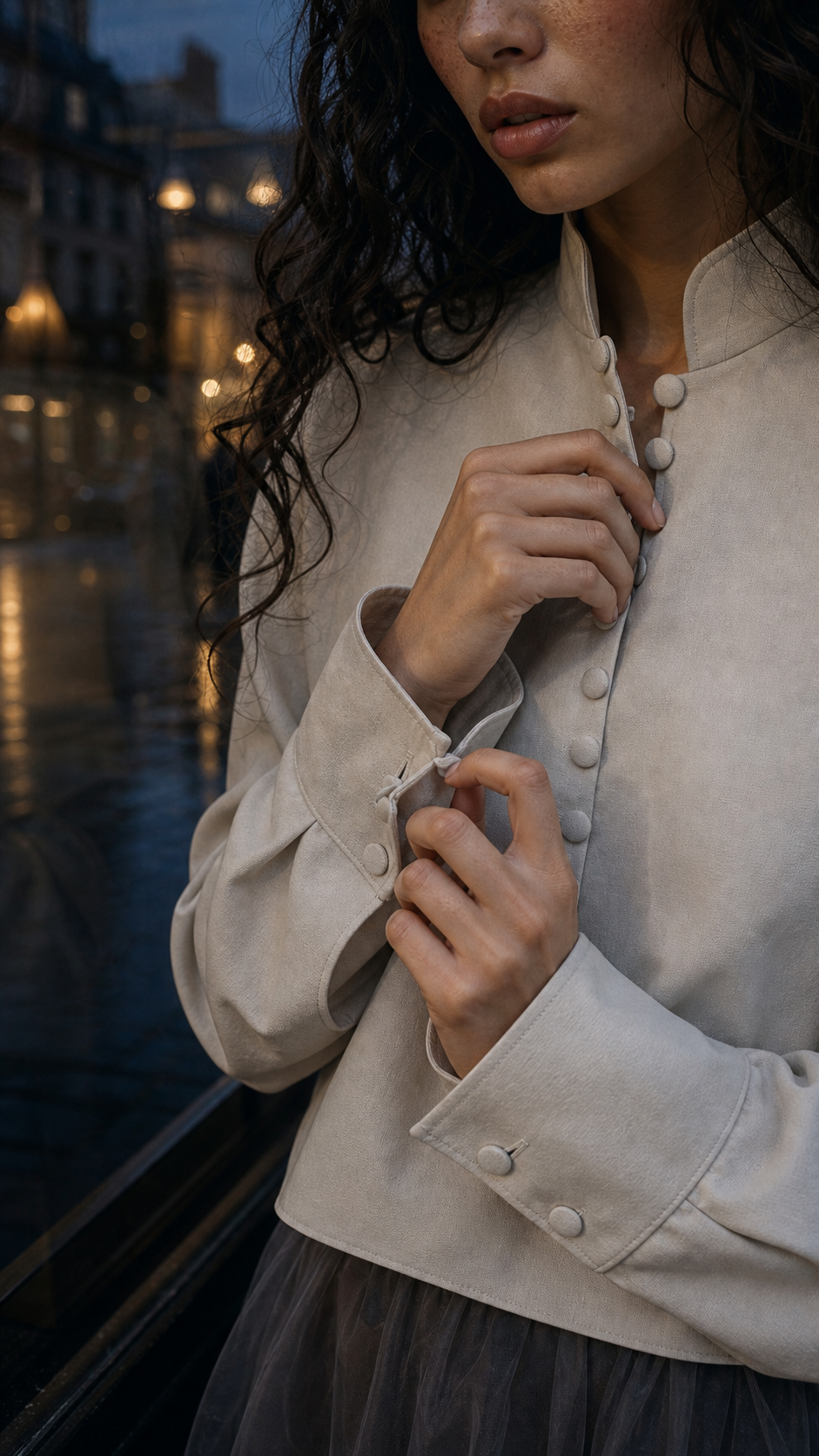
Some moments feel public. Others almost accidental — a bedroom, an unanswered call, a photograph taken too close. What we see changes. How close we get changes. The character doesn't.
The distance changes. The character doesn't.
07 · Wardrobe as character
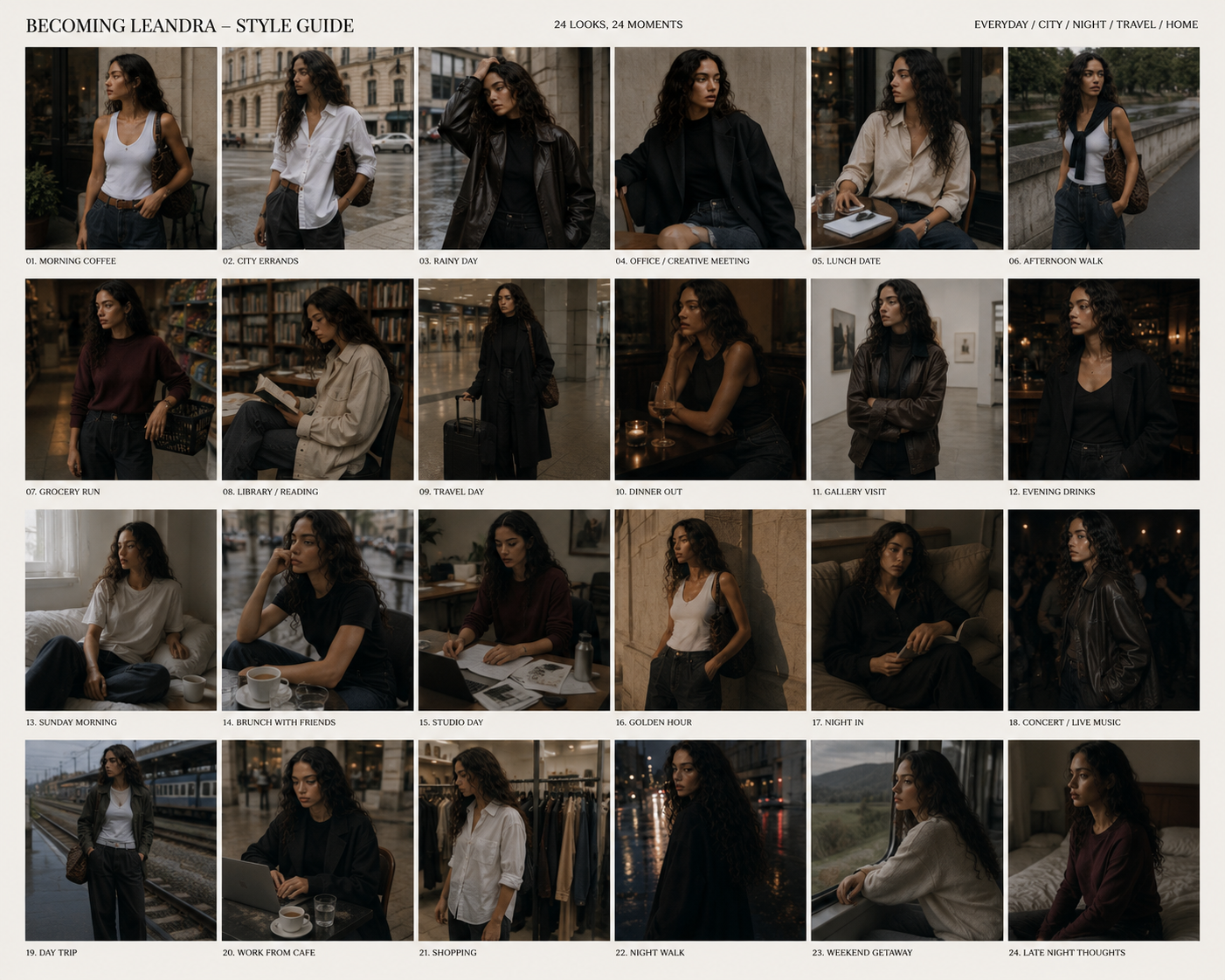
Her wardrobe works like memory: pieces return, combinations shift, nothing feels newly styled for the camera.
Oversized tailoring, worn leather, white and black, dark denim, soft knitwear and simple tanks or T-shirts form a repeatable visual language. Large leather or woven bags and quiet luxury add weight without announcing themselves. European, nonchalant and lived-in—the clothes do not decorate Leandra; they reveal how she moves through a day.
08 · Fashion research
Trend becomes useful only when it is made emotionally specific.
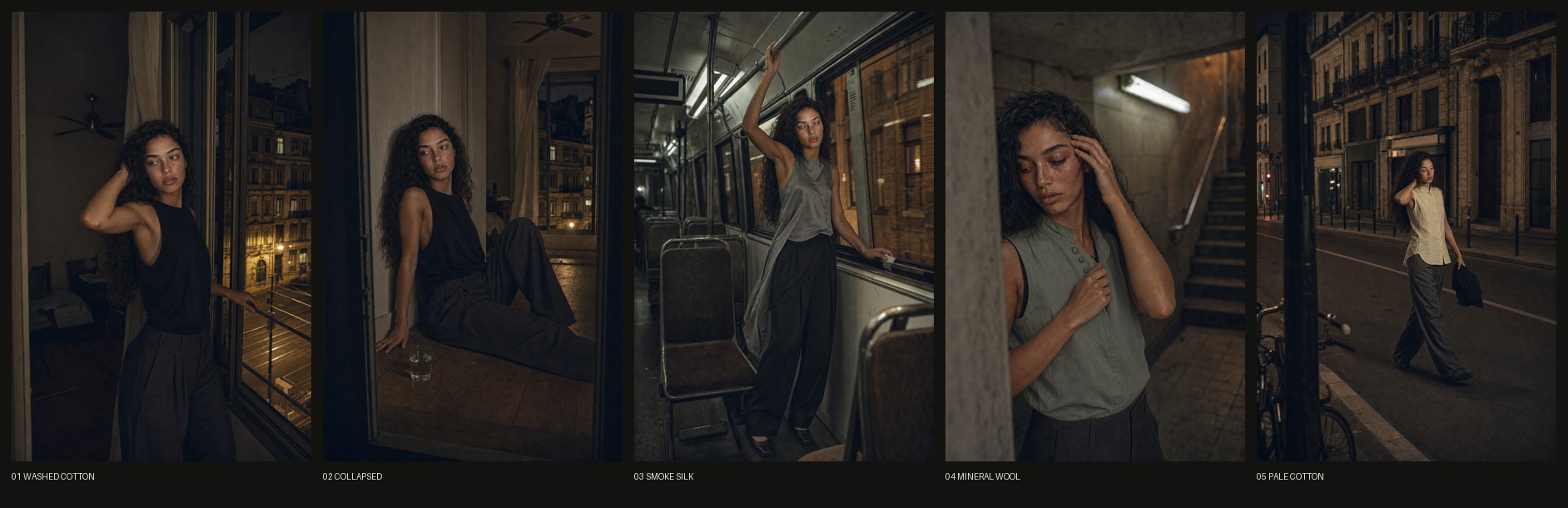
The summer research rejected generic seasonal fashion in favour of urban material tension: cotton with a domestic memory, off-kilter stripes, controlled volume, utility seams and garments that register heat through behaviour rather than seduction.
The city does not feel summery. It feels unable to cool down.
09 · Runway translation
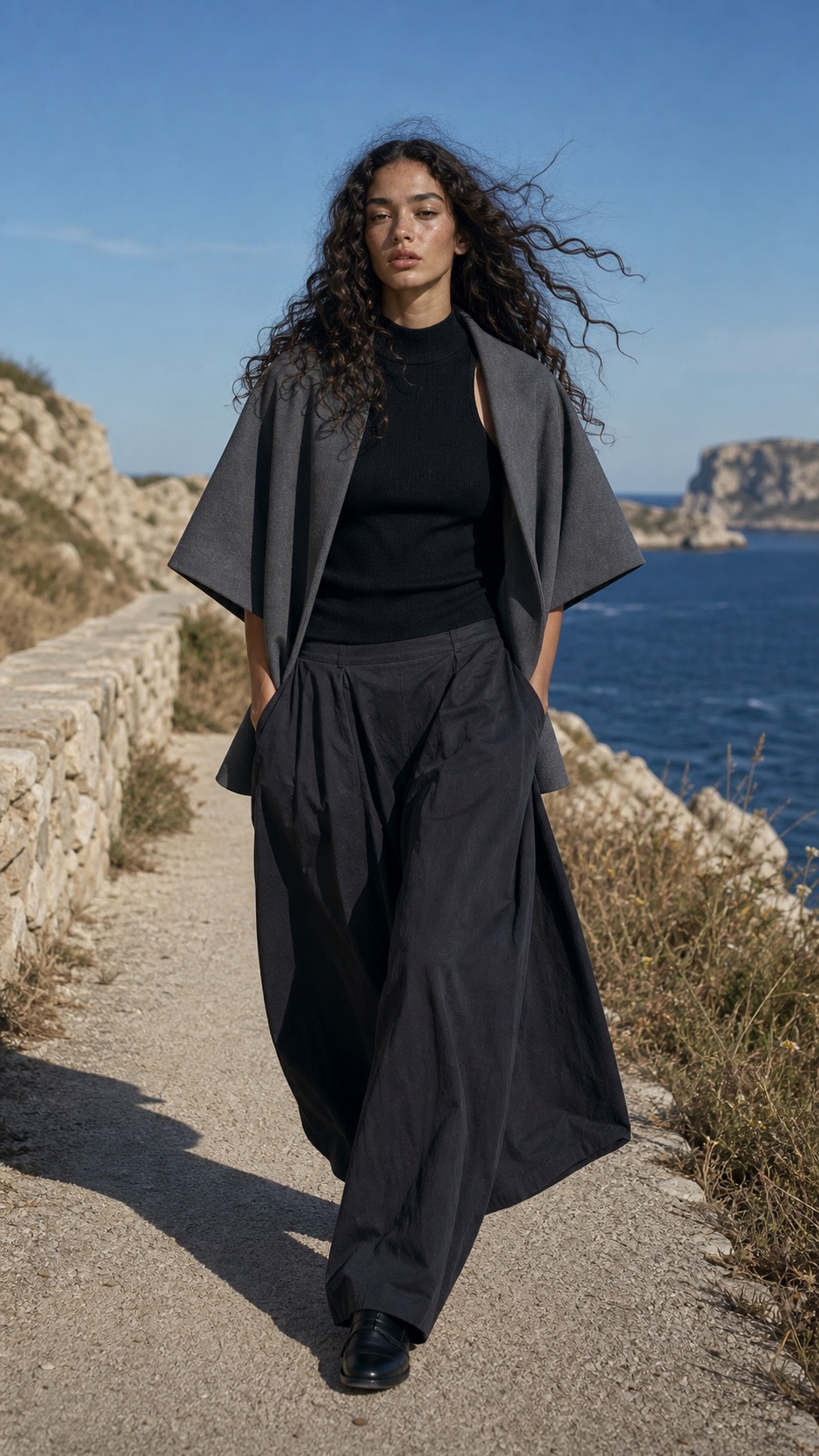
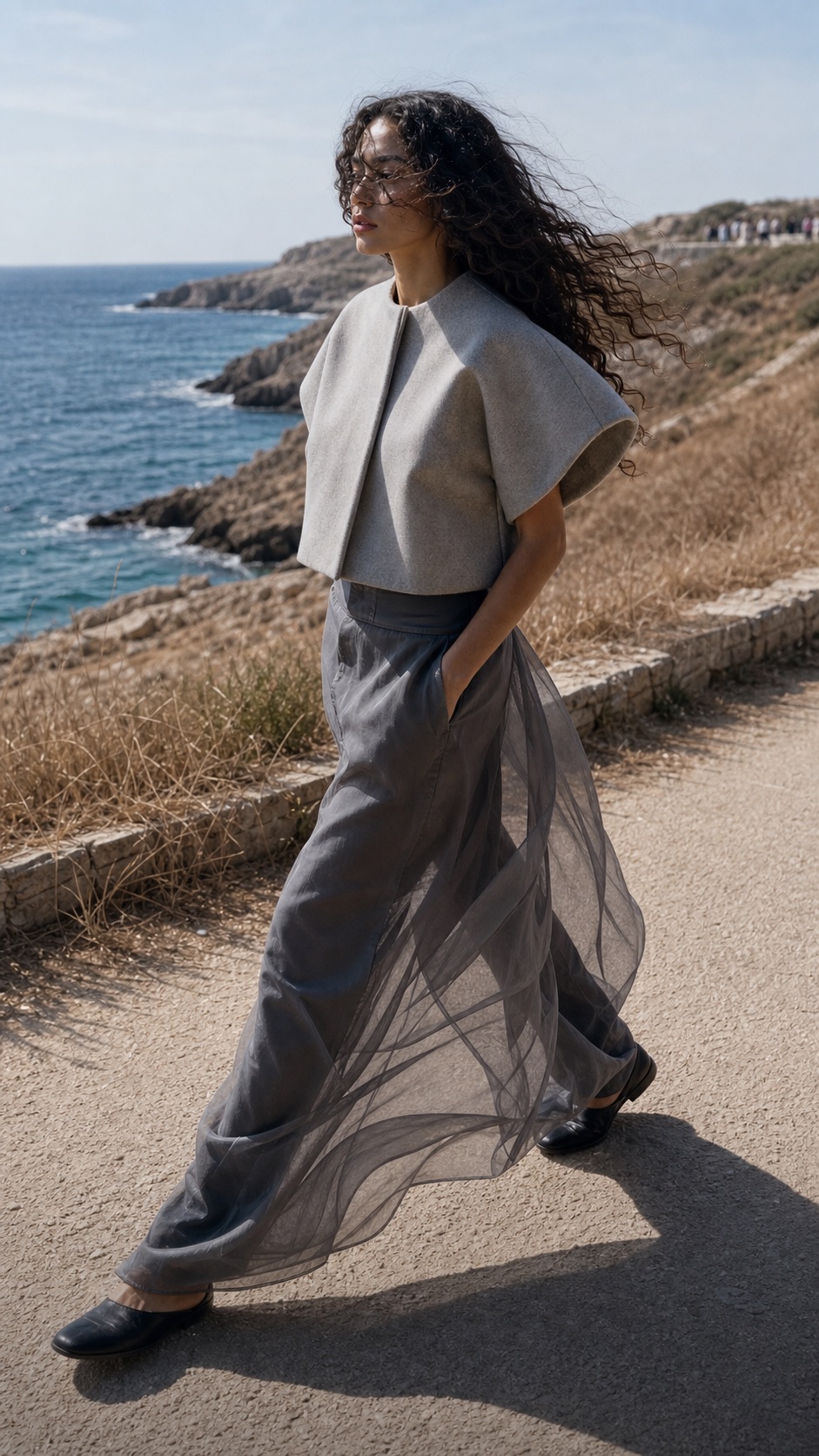
The catwalk test asks whether Leandra can carry fashion logic without losing character.
The coastal runway translation takes the same identity rules into a brighter, more exposed fashion register. It is not a brand fantasy pasted onto the character; it is a stress test for movement, proportion, material and gaze.

10 · Reels / motion system
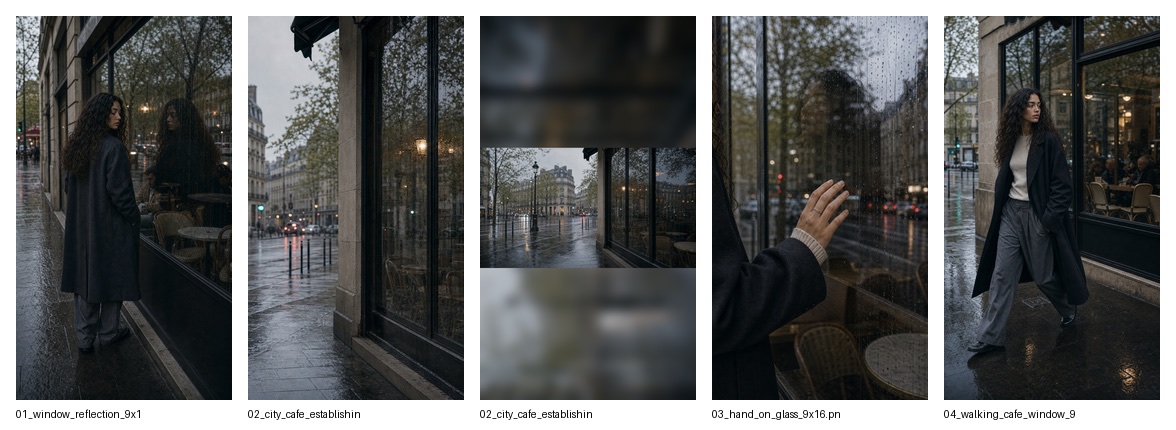
Motion makes the system more fragile, and more revealing.
The reels test whether scene order, gesture, wardrobe and identity can survive time. A still can hide drift. Motion exposes it. That is why the project treats each reel as research evidence: continuity, rhythm, face integrity and atmosphere are judged together.
11 · Proof of control
The strongest output is not the image that looks best. It is the image that survives the rules.
The project became stronger once rejection was treated as authorship. Every image or reel has to pass four checks: identity, emotional temperature, fashion behaviour and narrative distance. If one fails, the image is not Leandra yet.
A synthetic persona becomes interesting only when it can refuse the tool.
- 01
Lock the face
The canon sheet leads every generation; beauty, fashion and camera movement are secondary to recognition.
- 02
Name the pressure
Heat, transit or runway are not moods. They are conditions that test how the character behaves.
- 03
Make fashion behave
Wardrobe may change the register, never the person. Material has to support posture, gaze and restraint.
- 04
Audit motion
Reels are kept only when identity survives time: no face drift, no generic acting, no decorative movement.
12 · Output
The deliverable is not one image. It is the ability to continue a world.
Becoming Leandra now exists as a connected research archive and production OS: identity source of truth, character bible, face keeper rules, authored distance, fashion register, prompt library, scene engine and motion audit. Instagram is one distribution surface for the resulting work, not the character strategy itself. The value sits in continuity—the system knows what belongs, what drifts and what should be rejected.
Start a conversation
hello@tomtjonaloi.xyz ↗